

Lately quite a few Endfield players have been watching “Snowpine Reverie” content, for a simple reason: what people fear most during the early grind has never been failing a fight, but pouring hard-saved resources into the wrong place… You train the character, upgrade the weapon, forge the gear, then switch teams and realize none of it fits. Anyone who has played a training-heavy game knows that pain!!
It has already been confirmed that Operator and weapon specialization content will be filled in step by step, covering weapon recommendations, gear selection, team composition, skill analysis, and talent development; it will further include weapons’ main and sub stats, max-level panels, skill effects, plus gear’s initial stats and how they change after forging. That direction actually matters a lot, because what really creates a gap in Endfield is not just “whether you have the character,” but whether you can twist character, gear, skill loops, and teammate synergy into one rope.
But one thing has to be said up front: the information released so far leans more toward a guide-column preview. It does not fully list specific numbers and final conclusions for every Operator and every weapon. So the right way to approach this now is not to scramble for a so-called “one and only endgame answer,” but to understand what problems the specialization guides will solve, then keep your training resources in a safer place.
1. Weapon recommendations aren’t about rarity—first see what the character actually scales with
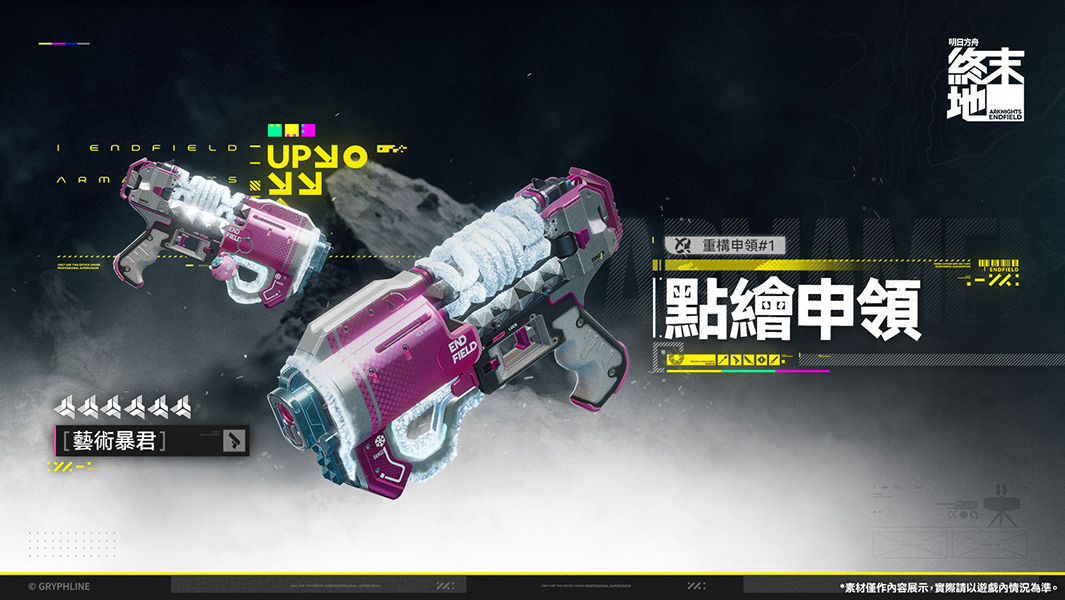
Endfield weapon recommendations will likely become one of the highest-search guide modules later on. After all, a weapon often does not just decide base ATK or DEF; it also affects skill trigger frequency, damage rhythm, buff uptime, and can even change a character’s role in the team.
Many players’ first reaction is: max the high-rarity weapons first. That thinking isn’t wrong, but it isn’t complete either. What really deserves priority is whether the weapon’s main stats, sub stats, and skill effects line up with the Operator’s kit. If a DPS needs to cast skills frequently, you cannot just stare at panel ATK; Operators who hold the field, take hits, or support also may not want a pure DPS weapon jammed in.
When you later look at Endfield weapon recommendations, start by asking yourself three questions:
First, does this Operator’s core damage come from basic attacks, skills, or a burst after some condition is met; second, does the weapon provide direct damage, stat buffs, or functional effects that improve the loop; third, in your actual team, can this weapon keep triggering, or does it only look good in the training room.
Especially at launch or early in a version, resources are very tight. A well-fitting mid-tier weapon is often more comfortable than a high-tier weapon that cannot reliably play out its effect. Don’t get led astray by the words “max-level panel.” In real combat, skills cycling and combos chaining smoothly is what’s actually strong.
2. Gear selection and forging: don’t chase a full set of endgame rolls only
The gear section is equally worth watching. The previewed guide direction will include gear initial values and stat changes after forging, which means players later won’t just look at “what to wear,” but also judge “whether it’s worth dumping more materials.”
The easiest mistake in gear training is immediately pouring huge forging resources into a piece that looks decent early on. A few days later you switch to a better-fitting system, the materials are gone, and it really hurts… So before complete numbers and set logic are fully clear, split gear into two types.
Type one is general-purpose gear: as long as the stats benefit most of your main characters, you can upgrade these moderately to help you clear stages and farm resource stages steadily; type two is mechanic-specific gear: it needs particular stats, particular skill triggers, or is clearly bound to a certain Operator’s playstyle—keep these for now and forge after your team direction is set.
Forging also isn’t “tap it if you can.” If one forge only brings a limited panel bump but burns a lot of scarce materials, its priority may not beat character level, core skills, or your main weapon. Training games fear egalitarianism most: four half-finished characters are often worse than one main carry and one key support coming online first.
3. Team composition is the soul of Endfield guides
Guides that only talk about single-character strength have limited reference value in Endfield’s cooperative combat. If later specialization guides can explain team building clearly, their usefulness will jump a whole tier.
Team building shouldn’t only ask “who deals the most,” but what job each Operator does in the fight flow. Someone holds the field, someone clears trash fast, someone adds control, sustain, or buffs, and someone exists for the burst window. Slot those roles together and you get a truly smooth combat experience.
Here we can boldly predict that later popular Endfield teams will roughly follow a few ideas:
The first is a stable early-game team: high forgiveness, less likely to wipe on unfamiliar stages, good for pushing the story and resource stages; the second is a sustained DPS team that slowly presses HP bars with a stable loop, with relatively even gear demands; the third is a burst swap team that uses skill windows to delete high-threat targets, with higher demands on execution and character fit; the fourth may be a system team built around a specific attribute or mechanic—very strong once complete, but don’t force it early.
Some players like to ask “who is the strongest four-man,” and that usually has no fixed answer early in a version. Stage environments, enemy mechanics, and who you own all affect the final pick. Rather than copying one lineup, it’s more worth learning what the team is missing: if you lack survivability, add a stable slot; if DPS drops off, add main damage; if skills keep stalling the loop, find a teammate who improves the tempo.
4. Skill analysis is about the loop, not just single-hit multipliers
Skill analysis is the easiest to skip and the part you should read most carefully. Many characters’ strength isn’t how much one skill hits for, but whether skills chain, how fast resources recover, how long enhanced states last, and whether teammates can fully use the window.
So when you later read Endfield skill guides, watch these dimensions first: skill start conditions, cooldown or resource cost, core buff duration, whether you need to swap characters to trigger, and how it links with teammate skills. Put those together and you have the character’s real combat feel.
For example, an Operator with a high-multiplier skill that needs stacks, charging, or a teammate-applied status before it starts is better in a burst system; another character whose single hits aren’t flashy but frequently provides stable effects may be stronger in long fights. Not every “small number” skill is weak, and not every flashy animation skill deserves mindless priority upgrades.
The dream and training narrative around Tiflos has also made many players more excited about later character growth content. Rather than treating it as mere atmosphere, players care more about whether, after training, the character shows clear growth in real combat. That answer still lands on skill mechanics, gear synergy, and team role.
5. Talent development is a long-term project—don’t get baited by short-term power
Talent development is often the part of a specialization system that needs the most patience. It doesn’t instantly give you obvious numbers like leveling, and it doesn’t feel as good as pulling a new weapon, but by mid-to-late game talent gaps usually start to show.
When assigning talents early, prioritize the character’s most used combat functions. Main DPS should first strengthen stable damage amp, key resource loops, and core skills; functional characters should focus more on support coverage, survivability, or control efficiency. Don’t randomly tap a talent just because it “adds a little of everything.” What really has value are the key nodes that change combat tempo.
If you haven’t locked a long-term main lineup, be even more restrained with talent resources. You can first take the basic, always-on gains, and hold off on high-investment nodes clearly bound to a playstyle branch. After full character data, weapon effects, and team direction are clearer, concentrated investment will use resources much more efficiently.
Put simply, talents aren’t there so you can play everything; they’re there so you can push the system you actually want to play to a higher ceiling. Being chill early is totally fine—don’t get excited and trap yourself in a resource drought.
6. Resource planning at this stage: protect the mains first, then wait for complete information
Since specific Operator and weapon numbers and power rankings haven’t fully rolled out, resource planning now should prioritize “stable.” First guarantee a commonly used team’s baseline power: a main DPS, a teammate who provides stable utility, plus moderately upgraded weapons and gear—enough for most early challenges.
Material investment order can be understood simply as: first solve whether you can clear, then whether you can clear faster, and only last chase extreme panels. Character level, key skills, and fitting weapons usually come first; gear forging and highly exclusive talent branches are better after the lineup is clear.
Also, don’t rush to follow the crowd just because the community posts some exaggerated claims. Early-version evaluations change fast; today’s hyped combo may be replaced tomorrow by a better-fitting playstyle. Truly durable resource planning is always: concentrate training, keep a reserve, and don’t pay tuition to unknown mechanics in advance.
KARDZ Top-Up Guide: when you need extra resources, channel safety matters more than discounts
When your main lineup is taking shape and you really need extra in-game resources, don’t pick a top-up channel just because it’s convenient for a moment. Safety, ease, and stable delivery matter far more than a suspiciously low price; you’ve raised the account this long—no need to take risks for a small price gap.
KARDZ offers UID direct top-up, which is more straightforward and doesn’t require handing over account passwords; it also has 24/7 support, so order or delivery issues can be handled promptly. For players who want monthly resources or are preparing character or weapon training plans, choosing a reliable platform saves a lot of trouble. The right call is to leave your time for pushing stages and studying team comps.
What Endfield specialization guides are most worth looking forward to next is truly stringing weapons, gear, skills, talents, and team building together. Looking at a single stat is meaningless; a training plan is only qualified if it lets the Operator perform steadily in a team.
There’s no need to argue who is definitely the version answer right now. First get your main team running smoothly and keep enough resources, then invest precisely after the specific specialization content is gradually completed—you’ll have a much more comfortable time. When full weapon and Operator data actually lands, who the dark horse is and which team will blow up the meta is what we should really study~